The question “Is this pressure comfortable?” is perhaps the most helpful to include during a beginning relaxation massage. The question sounds simple, but it turns the massage practice from guessing to being aware. Without it, a learner might do the same glide, palm, or kneading stroke even when the massage receiver quietly gets stiffer, holds their breath, or waits for the movement to stop.
To be most effective, a comfort question must be specific. “Is this okay?” can be hard to answer since the receiver does not know you mean “Is the pressure okay?” “Is the speed okay?” “Is this area of my body okay?” or “Is there enough lotion on my skin?” An easier question to answer is, “Is this pressure, lighter, the same or slightly firmer?” A similar question to ask is, “Do you think this is a pace that is too relaxing, or would you like for me to slow down?” These questions allow the receiver a set of clear choices rather than making them define the massage for themselves.
Check before you move to a different part of the body. In particular, check before you start working on the neck, the feet, hands, or any sensitive area. This is a nice gesture that also helps establish some boundaries. It is fine to say, “I am going to start a glide on your forearm” or, “I would like to do a broad palm on your upper back” before doing so. If the receiver has some idea of what to expect, the first touch will not be as jarring and the massage will flow more smoothly and with more awareness.
Check in on the receiver at the right times. Instead of checking in on every single stroke, check in at natural pauses. After doing several slow strokes, pause in your movement with good posture and ask just one or two questions. If you are switching from glides to kneading, check if the pressure is the same or if you should change it. If using your thumbs at all, you might check in sooner than you would with glides, as it is possible for thumb pressure to feel sharper than broad palm strokes more quickly. If the receiver hesitates, consider that a useful message and ease up on your pressure.
The receiver’s response will not be helpful if you do not adjust your massage. If you get a “lighter pressure,” do not say “Okay,” and leave your hands where they are at the same intensity of massage. Use a softer contact with the receiver, use a larger palm area, slow down the massage, or take the weight off your hand. If they ask for the same pressure, you may work to find that same level of pressure throughout the whole massage stroke. Your goal is not to get the nice answer but instead to have a better massage that you can adjust during the session.
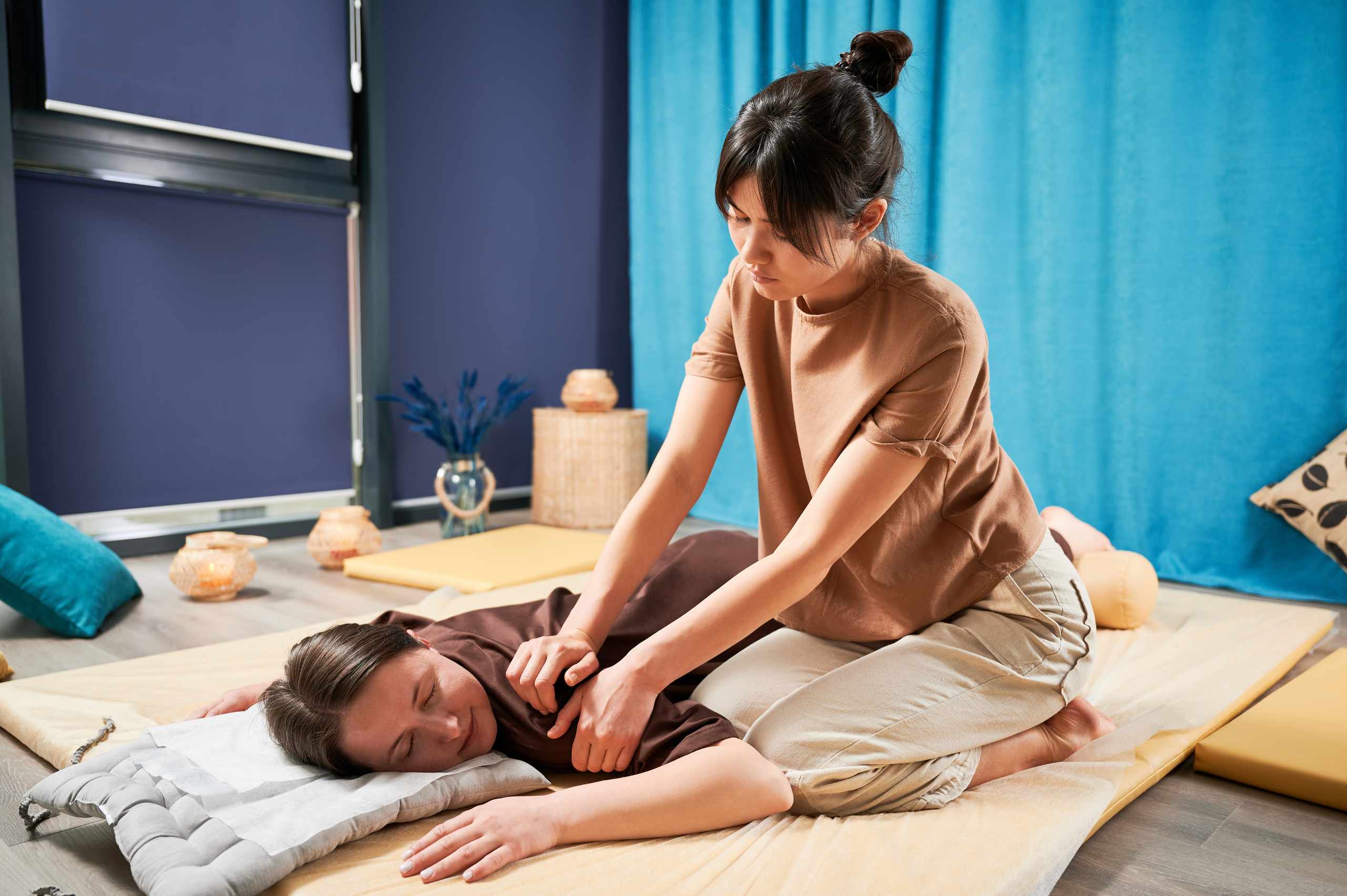
Beginners often feel like they should not have to ask these questions because they will ruin the relaxation mood. But asking the occasional question actually helps people to feel safe. What ruins relaxation is asking questions too anxiously or too frequently. Do not worry too much about finding the perfect words. Ask a simple, soft question with a soft voice and give the receiver time to answer. While a massage session should not be a talk session, it should be a consent session with awareness and room to adjust.
Asking a good comfort question helps both parties to be aware during the massage. The receiver can tell you what is too fast, too hard, or unclear. You can then use that feedback and adjust your thumb pressure, massage contact, or rhythm. Eventually, asking for feedback becomes a comfortable part of the massage session. A question can be part of good touch as easily as clean linens, a comfortable table, and not hurting the receiver with a hard or bony contact.