Before you can get any massage technique or move into any movement in your relaxation massage practice, basic hand placement alone can determine whether or not it feels like a relaxation massage. For someone just starting out, hand placement is a fast way to feel safer in and feel more organized during massage practice.
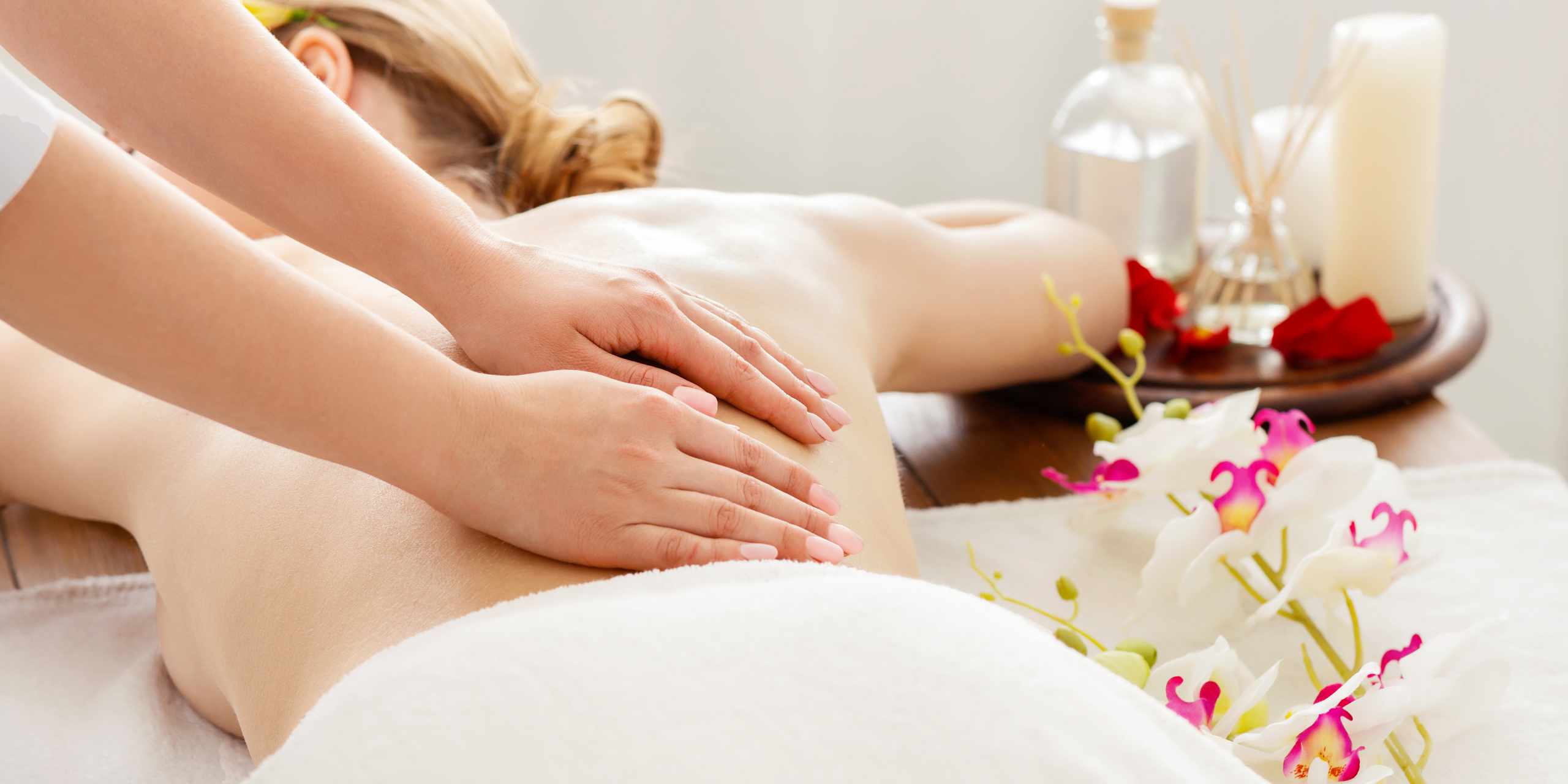
One of the first things that you might notice yourself doing is the contact of fingertips only when it could be palm contact. While fingertips can be helpful in small circular strokes, when used too early during a massage practice, they are creating only fingertip pressure. In areas like the shoulder, upper back, arm, hand, you will generally have more control with the palm, spreading pressure, allowing a softer wrist for yourself, and time to feel the response from the massage receiver.
In addition, sometimes your hand will land before you are ready. Even in a basic relaxation massage, the palm can contact the body while you are still adjusting yourself and finding your next movement or wondering how much pressure you might want to apply. This might lead to a jarring first stroke. Before you make a massage movement, pause to check your shoulder, check your wrist, and take a breath. Contact, settle, then a stroke.
If you use the thumb, you will want to be especially careful with your hand placement. Pressing the thumb near a joint, a bony surface, or a very sensitive spot, even when the pressure feels like little, can cause a sharp sensation. If you use the thumb during a relaxation massage, it should be gentle, brief, supported, and not the focus. In basic relaxation massage, the thumb should not replace clear palm contact or careful pressure control.
Sometimes the side of your hand could cause the pressure you might feel from massage contact. You might think that your whole palm contacts, but you might be applying the most pressure at your heel of the hand or the one side of your palm. That might lead to uneven pressure on the movement of a glide stroke and a very light, slow kneading. If you want to check your placement and see where your contact might be the heaviest, during your practice you can pause and ask yourself that question. You should widen the hand, soften the fingers, and reduce the pressure.
Hand placement and massage boundaries are also related, as well as checks in comfort for the receiver during massage. Before you practice near the neck, hands, feet, or any other sensitive spot, the learner should ask clearly and respect the answer. Correct hand placement isn’t anatomy or technique only; it is also about what area might be practiced on, what the pressure might feel like, and making the practice safe in asking for changes at any moment.
Try practicing hand placement as your only focus for the briefest practice session instead of just one practice skill in an overview of your massage practice. You can use fresh towels, an area that you can comfortably lay down in, and just one area of the receiver’s body that you can safely practice your relaxation massage technique. Place your palm, check the pressure, glide your hands very slow and very soft, then reset the hands in your practice and keep going. Check out if your contact might feel broad or narrow, soft or rigid, slow or rushed; improvement might seem slight at first, and it is easy to notice when the practice recipient is un-bracing, the receiver might be relaxed and your hands not moving so fast.