Gentle pressure isn’t weak pressure. It’s steady, distinct, and readily modifiable. Someone new to the craft is often tempted to increase the pressure to make the massage appear more “effective.” However, too much pressure can easily translate into a harsh sensation for the receiver and cause discomfort in the hands of the giver. Instead of pressing deeper right away, try beginning with broader, gentler contact. Observe the response. Then, apply a bit more pressure if it’s needed and appropriate.
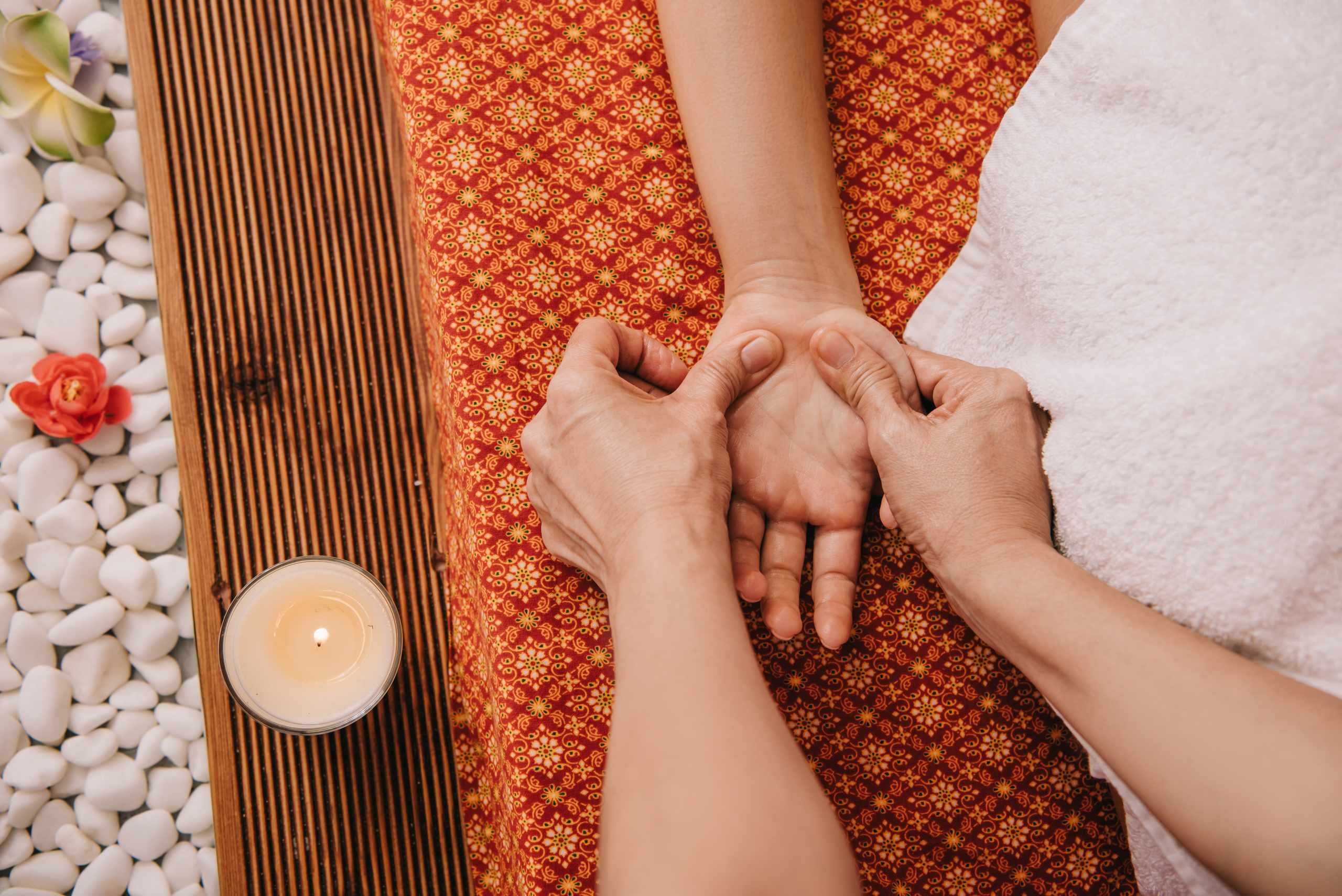
Start by using the palm, not the fingertips or thumb, as the contact area. Rest the palm on a suitable location, such as the upper back, shoulder region, arm, or hand, and allow the contact to establish itself. Before beginning any strokes, notice that your palm has not yet begun pushing. Are your hands relaxed? Are your shoulders dropping to a natural height? Are you feeling evenly distributed with your fingertips, your wrist, or the base of your palm? If the base of your palm is pushing while your fingertips are stiff, you should relax your grip before you move.
A helpful way to practice with a new partner is to use a “pressure scale” and ask for input. You might ask your partner to rate the amount of pressure you’re using as light, moderate, or too much. Start with a few long, gliding strokes on the light end of the scale. Slowly increase the intensity and amount of weight as your partner responds to your touch. If this seems uncomfortable, stop the strokes before you increase the intensity. This helps you not to guess. It also helps you understand that intensity isn’t the only factor in pressure. Rate of stroke, hand shape, supporting surface of hand, and wrist angle all affect how the pressure will feel.
When you first practice the long strokes, go slowly. You should be able to feel where your hand is going. This way, you won’t feel that you’re pressing too hard at the beginning of the stroke or lose contact at the end. Begin one stroke at a time using just your palm, from your shoulder to your upper arm, or from your upper arm or shoulder down your forearm to your hand. This can be facilitated with some massage lotion or oil. However, this is only appropriate when your setup provides the best experience for your partner while being able to practice these strokes. Ask the receiver if your partner feels comfortable with this. Do they want more pressure or light pressure? Or, do they want you to keep the pace and angle the same?
If using your fingertips or thumb, you’ll want to be careful, as it can be easy to apply sharp pressure in your fingers or thumb. Practice with the same contact area using the palm of your hand or the soft part of your fingers. If you feel that your partner is comfortable with thumb or finger pressure and they are interested in more pressure, use this as an opportunity to try it. Keep your contact on your thumbs short and easy, while keeping in mind to avoid joints, bony areas, sore or painful areas, or areas that could easily be too sensitive for the pressure of your thumb. In other words, using your thumb doesn’t mean you have to apply pressure or force it deeply into the tissue. Remember that you should avoid deep pressure with your thumb in any beginner’s relaxation massage course.
If you find yourself pushing into your wrists, or that your hands are quickly getting tired, you’re probably leaning from your wrists. Be sure to position yourself comfortably near the massage table where you can reach without strain. Your shoulders should drop, and your arms should reach forward and backward naturally, without strain. Make small movements with your body instead of just using your fingers. If you begin to feel any tension building in your hands or wrists, take a moment, stop, and reset. Go back to broad, gentle, palm pressure and begin your strokes again.
You’ll know you’re becoming a better practitioner when you can easily and naturally modulate the intensity of your pressure. You can make your next strokes lighter without stopping abruptly, slow down the pace without losing contact, and feel more confident about asking about comfort, without it feeling out of place or “formal.” Learning a gentle massage practice means making these small, easy adjustments and becoming more aware. When the practitioner can practice gentle massage, with calm contact that is respectful of the receiver and easy to alter during the massage, the session feels more controlled and appropriate, both for the student and the recipient.